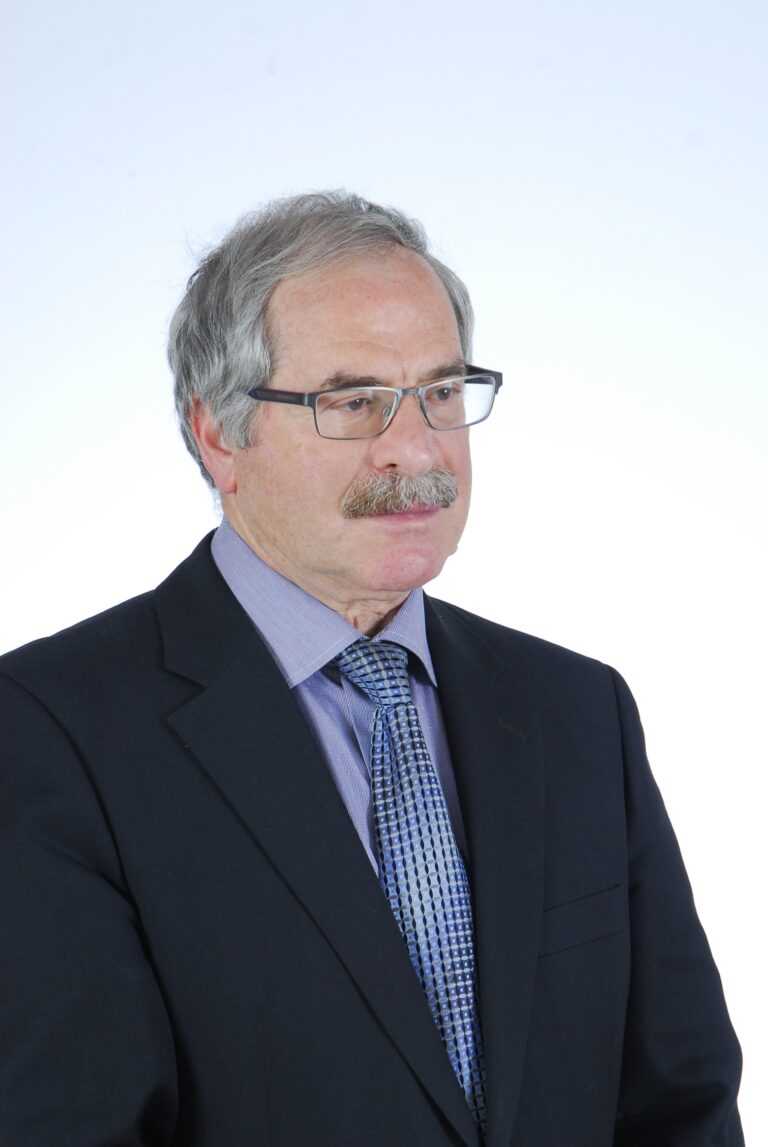
Greeting by Emeritus Prof. Chr. Charalambakis, Full Member of the Academy of Athens
Ladies and gentlemen, distinguished conference participants,
Allow me, first of all, to congratulate the organizers of the 12th International Summer University “Greek Language, Culture and the Media” for this important conference. Its driving force is Professor Nicoletta Tsitsanoudi-Mallidi, Dean of the School of Education at the University of Ioannina, whom I warmly thank for the honour of her invitation, together with Dr. Vasilis Adrahtas, Head of the Greek Studies Program at the University of New South Wales.
I am delighted to address such a distinguished audience, consisting of speakers who examine the pressing issues of language teaching at both theoretical and practical levels, as well as colleagues actively engaged in education across all three levels of schooling. I regret that circumstances beyond my control do not allow me to be with you in person. However advanced online communication may be, it can never fully replace physical presence.
The topic of my opening address is “Lexicography and the Teaching of Modern Greek: The Australian Experience.”
The first point I would like to emphasize is that there are no “magic formulas” for language teaching that can be applied irrespective of place and time. This means that the teacher, in the broadest sense of the term, must shape the content of instruction according to their own criteria, taking into account whom they teach, when, where, and why, as prescribed by the theory of communicative dynamism.
If one considers that language teaching primarily entails vocabulary acquisition, it becomes even clearer that an indispensable teaching tool is a good practical dictionary, which both teachers and learners should consult continuously while comparing it with other dictionaries. The future belongs to electronic lexicography. The Practical Dictionary of Modern Greek of the Academy of Athens has been freely accessible online since February 2023 and will continue to be updated on an ongoing basis.
The teaching of a language -whether mother tongue, second language, or foreign language-without the use of appropriate dictionaries is inconceivable. A good dictionary simultaneously serves as a grammar, a syntax guide, and a manual for correct language use. Artificial Intelligence should be used appropriately; however, it cannot replace human beings.
Making effective use of the information contained in every serious dictionary cultivates metacognitive skills, namely all those linguistic abilities that lead to autonomous learning and, ultimately, to the development of critical and creative thinking.
Let me offer an illustrative example demonstrating the fascinating play of words. The Practical Dictionary records the following primary meaning for the entry school: “an institution in which primary or secondary education (or vocational training) and, more generally, education are provided; by synecdoche, the body of its students and teachers, its programme, and/or the building in which it is housed.” If one studies this definition carefully, any semantic uncertainties related to the following expressions can be resolved:
- My child attends primary school.
- The school of life.
- The school went on an excursion.
- Our school needs repainting.
In each of these four examples, the word school carries a different meaning.
To use language effectively, metalinguistic knowledge -such as etymology- is not strictly necessary. However, those who learn foreign languages benefit greatly from studying the history of words and the common roots that connect them. In this regard, Greek is unparalleled. Polyglots know that school in English is school, in German Schule, in French école, in Italian scuola, and in Spanish escuela. All these words derive from the Latin schola(m), itself a faithful rendering of the Ancient Greek scholē (σχολή), which originally meant “leisure,” “idleness,” or “free time,” and later “that to which one ought to devote one’s leisure,” eventually acquiring the meaning of “study” and “school” as early as the fourth century BCE. In Arrian, the second-century CE historian, the form scholeion (σχολεῖον) is attested with essentially the same meaning it retains today. Through this single example, one can appreciate the profound influence of Ancient Greek on the enrichment of European vocabularies and the practical promotion of multilingualism.
The school as a social institution that cultivates knowledge and forms free and democratic citizens is a Greek creation, as is the first organized higher educational institution in the Western world. This was Plato’s School of Philosophy, founded around 385 BCE and known as the Academy, a word preserved almost unchanged in nearly all languages of the world to denote “a supreme intellectual institution that includes among its members leading figures in science, literature, and the fine arts and promotes excellence.”
Learning Greek facilitates the understanding of international scientific terminology and many neologisms formed with lexical and grammatical morphemlanguages inherited from Ancient Greek. George Kanarakis (1936-2025), Professor at Charles Sturt University, edited the monumental volume The Diachronic Contribution of Greek to Other Languages (Athens, 2014), as well as its English edition, The Legacy of the Greek Language (2017). Thirty-two scholars, in thirty-four studies devoted to twenty-eight languages across five continents, present the results of their research on the influence of Greek on other languages and its enduring contribution to the development of scientific vocabulary.
The concepts of “correctness” and “error” in language have occupied human thought since antiquity. The relevant international bibliography is inexhaustible. Among the most noteworthy recent publications is the elegant collective volume edited by Nicoletta Tsitsanoudi-Mallidi, Error and Its Dynamics in Language and Communication (Athens: Gutenberg, 2020). One day, positive examples should also be included under the entries error and mistake in English and their equivalents in all languages, so that people may realize that it is through mistakes -made by every human being- that we mature and improve.
Few people appreciate that some of humanity’s greatest discoveries, including life-saving ones such as penicillin, were made by accident. I have emphasized countless times that “when an error becomes dominant, it ceases to be an error.” Who today says anavaino (αναβαίνω) and katavaino (καταβαίνω) the only ‘correct’ forms, or who spells tsipoura (τσιπούρα ‘sea bream’) with two p?
My experiences from three visits to Australia over the past forty years remain unforgettable, chiefly because I witnessed the determination of the Greek diaspora to preserve the Greek language and Orthodox faith, together with customs and traditions originating from various regions of Greece. The Greek Orthodox Archdiocese of Australia, the Greek communities, and the associations of educators perform truly admirable work. Australia was among the first places where educational programs were implemented based on the principle that language is a carrier of identity and culture and that, for social cohesion, not merely tolerance but also understanding, encouragement, and cultivation of multiculturalism and multilingualism are of fundamental importance.
I came into close contact with ordinary Greek migrants of the first and especially the second generation, most of whom felt uprooted from their homeland and relied on memory as an anchor of salvation. The second generation -the children of the first migrants- maintained an admirable balance between their old and new homelands. Their children, the third generation, naturally felt more Australian than Greek. The fourth generation becomes almost entirely detached from the ancestral homeland of their distant relatives, and linguistic assimilation is effectively complete. Such is the inevitable course of migrant communities throughout the world.
The spread of Greek-language proficiency is not directly linked solely to teaching materials or even to teaching personnel, as was once believed. Improving the quality of instruction is essential but not sufficient. The most powerful factor is the motivation that leads individuals, whether young or old, to choose to learn a foreign language. The global dominance of English does not stem from any inherent superiority of the language itself but from the economic, military, and technological power of the United States, with direct consequences for the advancement of science, scholarship, and the arts.
Given that modern individuals live in multilingual and multicultural societies and therefore possess multiple identities, there is reason for optimism regarding the strengthening of Greek identity, provided that closer cooperation with Greece is established through programs linking language and culture. Nevertheless, the integration of Greek into the everyday lives of Australian-born children encounters objective challenges.
The Department for the Support and Promotion of the Greek Language of the Centre for the Greek Language has developed a new “National Strategic Framework for the Greek Language Worldwide” with five central objectives:
- Supporting and renewing Greek as a heritage language within diaspora communities.
- Expanding the learning of Greek as a foreign or second language among international audiences.
- Modernizing learning environments, certification processes, and teacher training through digital infrastructures and artificial intelligence.
- Strengthening Greek-language education in the fields of culture, research, and public diplomacy, while extending it to new areas connected with economic and professional activity, such as tourism and shipping.
- Establishing a system of governance, documentation, and evaluation that ensures continuity, accountability, and policy adaptation.
The 12th International Summer University constitutes tangible proof of the strong interest shown by the academic community and collective organizations in preserving Greek within diaspora communities, while also promoting it as a language that is not, in essence, “foreign,” since its lexical treasures have been embedded throughout history in the majority of the world’s languages.
Thank you for your attention.
Christophoros Charalambakis
Emeritus Professor of Linguistics, National and Kapodistrian University of Athens
Full Member of the Academy of Athens