Address by the Program Coordinator University of New South Wales
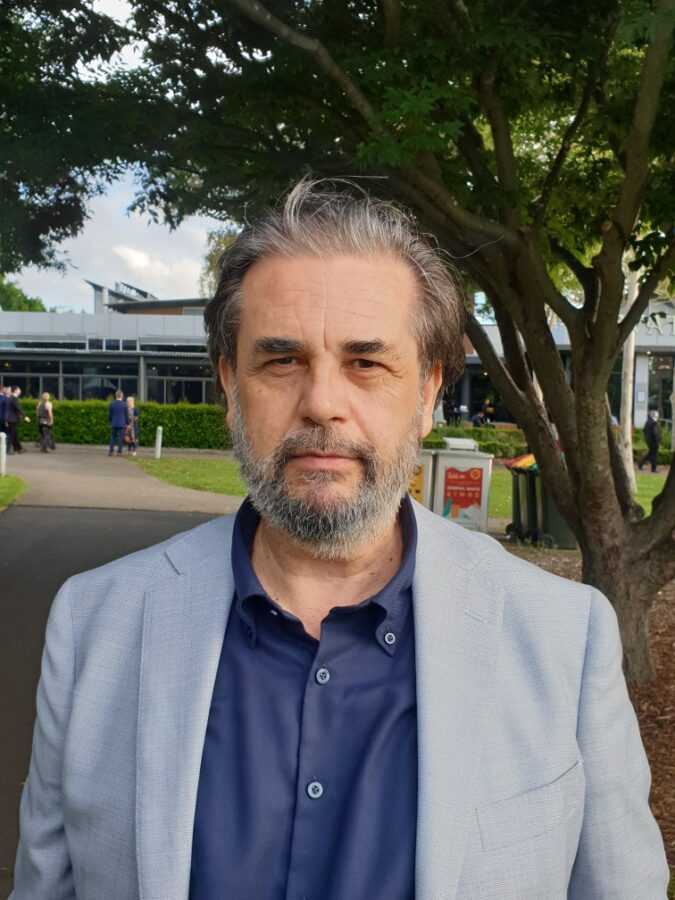
The future of the language depends on us!
Our responsibility toward the Greek-speaking diaspora in the Antipodes.
It is with great pleasure and a profound sense of honor that I welcome the collaboration between the Greek Studies Program of the University of New South Wales and Professor and Dean of the School of Education at the University of Ioannina, Nikoletta Tsitsanoudis -Mallidis, as well as, more broadly, the Laboratory for the Study of Social Issues, Media, and Education of the same School, within the framework of the 12th International Summer University. This year, Sydney has the privilege of hosting what I would dare to describe as a leading institution in the educational affairs of the global Greek diaspora.
The overarching theme for 2026 is “The Greek Language in Australia: From Memory to the Future,” a topic that confronts us both with the legacy handed down by previous generations and with the pressing challenges posed by contemporary technological developments and the particular needs of our youth. Through the program’s individual thematic strands, I am confident that our distinguished speakers will illuminate both aspects of this year’s research focus.
The formal academic program of the 12th International Summer University is complemented by five purely cultural events—cartoon and painting exhibitions, a traditional dance program, a documentary screening, and a musical evening—thereby emphasizing that the International Summer University is equally relevant to academics and non-academics, artists, and all kinds of cultural creators. At the same time, through these activities, we aim to highlight Australia as a space-time context in which the Greek spirit is not only preserved and safeguarded, but above all actively produced and renewed.
Through this message, I would like to make it clear that in Sydney we will not attempt to embellish realities or overlook problems, shortcomings, or even weaknesses within the social and cultural ecosystem of the diaspora. Such an approach would benefit no one. On the contrary, our primary objective is to engage directly with the problematic aspects of Greek-language education and their impact on our broader identity condition. Our aim is not to assign blame, but to examine the pathologies that have troubled us in the past or continue to do so in the present, threatening the very continuity of our distinct identity.
My collaboration with Professor and Dean Nikoletta Tsitsanoudis-Mallidis in organizing the 12th International Summer University was, from the outset, understood as a response to the crucial issue of responsibility borne by all teachers of Greek—particularly within the context of the Greek-speaking diaspora. I hope that, upon the conclusion of the proceedings of the 12th International Summer University in Sydney, we will have before us some initial, well-founded conclusions that can be utilized toward addressing some—if not all—of the educational, pedagogical, and socio-cultural challenges we face regarding the Greek language in the Antipodes.
I would like to conclude this address by thanking Ms. Nikoletta Tsitsanoudis-Mallidis for her trust in me, her team for their excellent cooperation with the Sydney team, and my own collaborators—namely, Nia Yitsa, Anastasia Karakominaki, Paraskevi Trifylli, Dr. Panagiotis Diamantis, and Konstantinos Sgouras. Without them, nothing would have been possible. Finally, a heartfelt “thank you” to all the sponsors of this event, who spared no expense in helping the 12th International Summer University reach even greater heights.
Vassilis Adrahtas
Program Coordinator, Greek Studies
University of New South Wales (UNSW)